
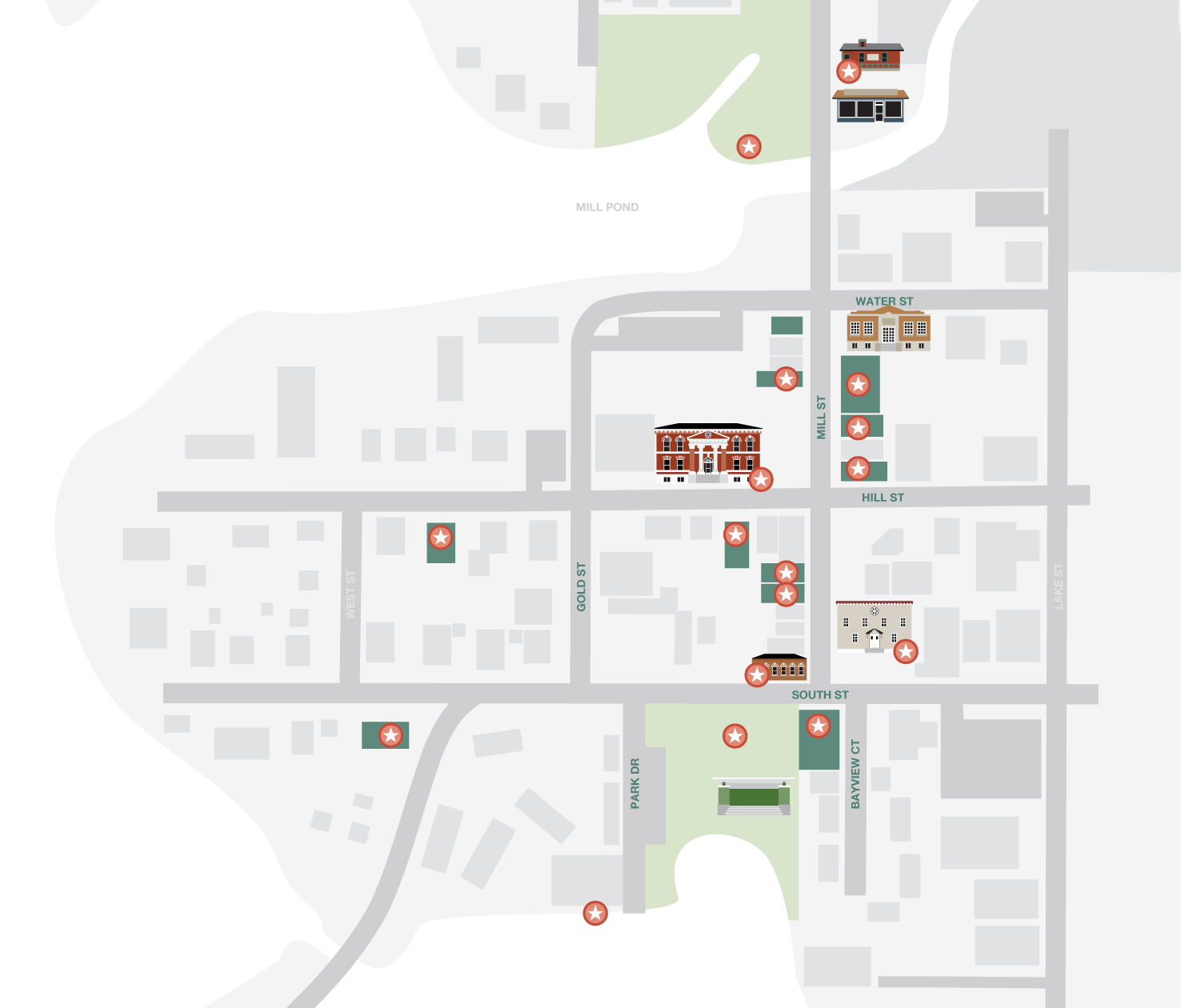
552 Mill St
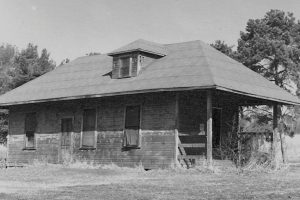
(Depot Museum)
The Fond du Lac-Sheboygan Railroad Company built this depot in 1872 located along the railroad line north of the current Hwy 23. It served as a depot until 1899, and was then relocated to what is now known as Robinhood Estates and converted to a summer cottage and later a horse stable. It was moved to it's current site and opened on July 4, 1976—the National Bicentennial—as a museum.
Playground Park & Green Lake Dam
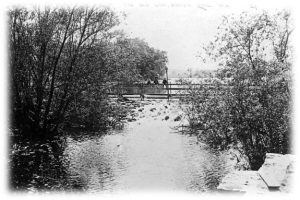
This park was the site of the Dart & Sherwood planning mill and later a grist mill. Victor Lawson, founder of Associated Press and owner of Chicago Daily News, bought and rebuilt the dam to maintain the lake level at his Lone Tree Farm estate (now Green Lake Conference Center). In the 1930's, the WPA (Works Progress Administration) and the Twentieth Century Club, a women's club, improved the site for a park.
529 Mill St
(Now Adashun Jones Real Estate)
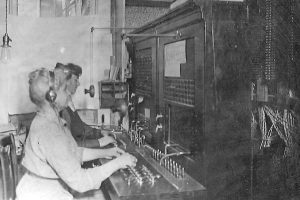
This building was home to a telephone service managed by George Thrasher and his wife, Jennie, "the telephone lady". They also operated a grocery store named Thrasher Store in the rear of the building, which sold ice cream made from a horse-powered machine.
530 Mill St.
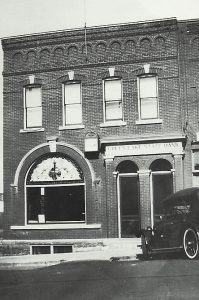
(Now Emmer Real Estate Group)
In 1902 the Green Lake State Bank opened on this site and continued until 1961. The bank temporarily occupied space in Eaton's Market before this building was completed. After the bank moved, doctor's offices, gift and jewelry shops and art stores occupied the space. This building remains much as it looked when built. The vault inside and the stained glass window remain intact.
526 Mill St.
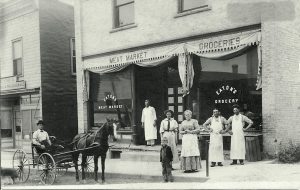
(Now KDR Wood Design Co.)
This building was built by Cassius Eaton about 1900 as Eaton's Grocery and Meat Market. Mr. Eaton had been a cattle buyer for many years. Over the years this building housed a bakery, a coffee shop, a variety store, clothing store, hardware and appliance store and an art shop. The Eaton family also built a home in 1901 across the street at 535 Mill Street.
518 Mill St
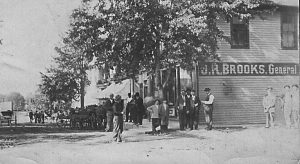
(Now Better Homes & Gardens Real Estate Special Properties)
This building was established in 1869 as a general store that operated for over 100 years by three generations of the Brooks family. Groceries and dry goods were available in the store. Hanging bananas and sausages are memories held by some
local residents. The back of the store was a meeting place to talk or play checkers for the men of the town.
492 Hill St.
(Now Town Square Community Center)
This building was built in 1898 to replace the 1863 courthouse. It was designed by architect William Waters, a renowned Oshkosh architect who also designed the 1893 Wisconsin Building at the Columbian Exposition in Chicago. It was placed on the National and State Register in 1981 and the Local Register in 1999. The cupola was blown off by a "cyclone" in 1914.
467 Hill St.
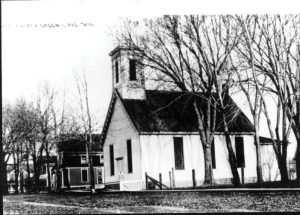
(Now a Private Residences)
This is the oldest documented building standing in Green Lake. Built in 1851, The Methodist congregation held services in this building until 1948. At that time the Methodist Church joined with the Congregational and Baptist churches to form the Federated Church of Green Lake which is still active today. The parsonage next door to the east is now two apartments.
493 Hill St.
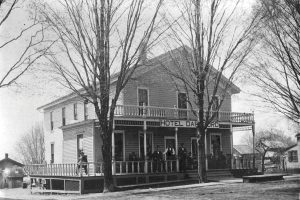
(Now Johnson & Black)
Built in 1881 by Velorus Root, a pioneer settler, the Dartford Hotel provided lodging for county board members. After housing an ice cream parlor, dry goods store and restaurant, it became Eaton's Market, operated by Henry Eaton. He opened one of the first self-service meat markets in Wisconsin in the 1940's at this location.
511 Mill St.
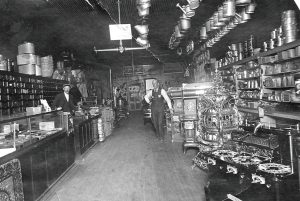
(Now GEAR.)
This building operated continuously as a hardware business from 1898 until 2010. The Francis Spencer family moved to Dartford after spending summers at Oakwood Hotel Resort. They built this building with a store and upper apartment. Items sold were: hardware, ranges, furnaces, paints, oils and brushes. They also did furnace work, general tin and galvanized iron work.
509 Mill St.
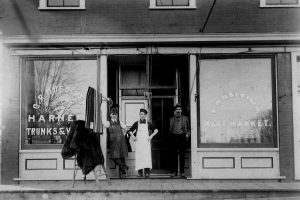
(Now Sassafras Coffee)
For 50 years beginning in 1898 Oscar Duescher operated a shop in this building, known as the Thrasher building. During the early years the shop specialized in harnesses. After automobiles were introduced it became a shoe sales and repair shop. The second floor served as a dance hall and a meeting place for community organizations including the Town of Brooklyn.
501 Mill St.
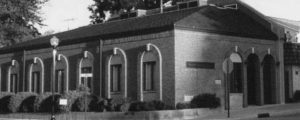
(Dartford Historical Society)
This building was built in 1981 and donated to the City of Green Lake as a public library by philanthropist Thomas Caestecker. The building was returned to Mr. Caestecker when a new library was opened and he then presented this building as a gift to the Dartford Historical Society in 1994, housing exhibits and an archival library of local history.
506 Mill St.
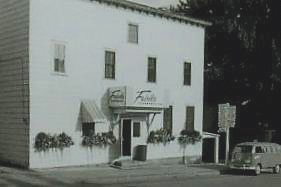
(Now Thrasher Opera House)
Built by Charlie Thrasher in 1910, the Opera House served as a community center for civic activities, dances, performances, basketball games and meetings. Movies were added when electricity came to the village in 1912. A manufacturing business for advertising items, a boat dealership, and educational materials business later occupied this building.
501 South St.
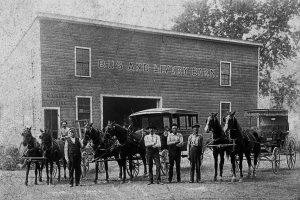
(Now North Bay Sport & Liquor)
Built in the 1860's, this building opened as Ezra Whiting Livery providing horse transportation for passengers to and from the railroad depot as well as rental of horses, carriages and omnibuses, a hearse for funerals, and buggy and wagon repair. Later it operated as a car dealership, filling station and auto repair shop. For several years it served as the Greyhound bus stop.
Deacon Mills Park
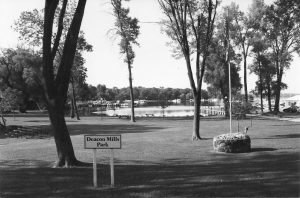
This park was a gift from Hattie Mills in memory of her father Jason C. "Deacon" Mills, the operator of a Civil War era hotel formerly located on the southeast corner of Mill and Hill St. A bandstand was built in the park in 1950 and dedicated to Bob Malcolm, a local musician who taught at the Green Lake High School. The park has been home to concerts, plays, movies, craft fairs and community events.
497 S. Lawson Dr.
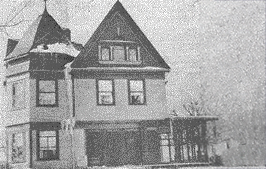
(Now McConnell Inn)
This Queen Anne style home was built in 1900 for John and Josephine McConnell. The house was bought and sold several times and at one point was used as a rooming house. Today it is a bed and breakfast. The original design of the main structure has not been altered through its many years, however an addition has been added to the rear.
Norton's Dock & Marina
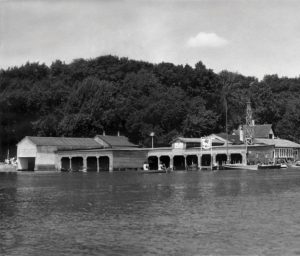
Built and operated by John Norton and his four sons, Norton's Dock and Marina were located here from the 1880's until the 1970's. A fleet of steamboats stationed at the dock conveyed people around the lake before roads were established. The Norton's also had a contract with the US Post Office for a marine mail route. They used their wooden Chris Craft boats to deliver mail.